The Hockendes Weib at the Dörenther Klippen – Legend & Hike near Brochterbeck
2024-09-17
The Hockendes Weib – landmark of the Dörenther Klippen
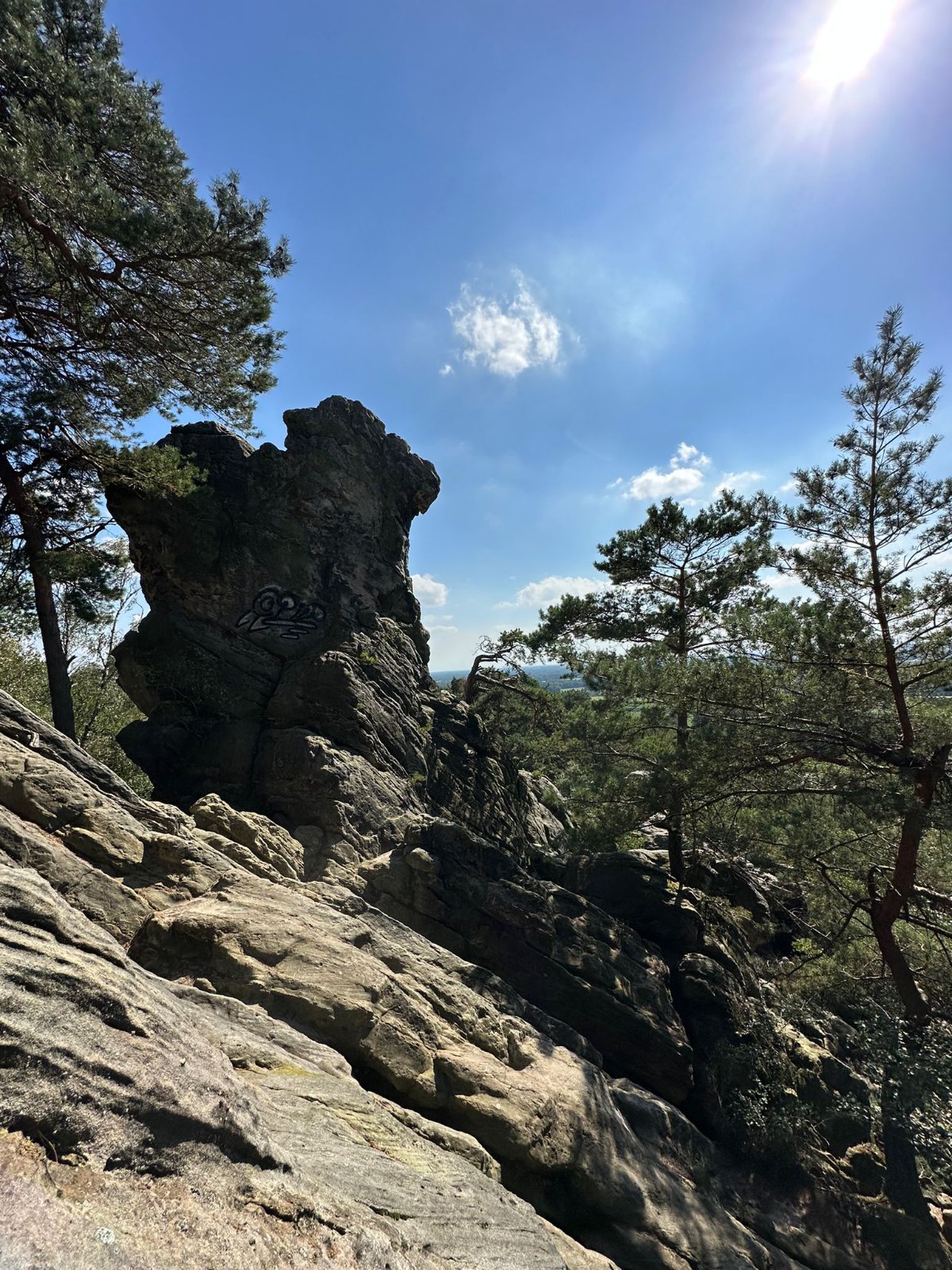
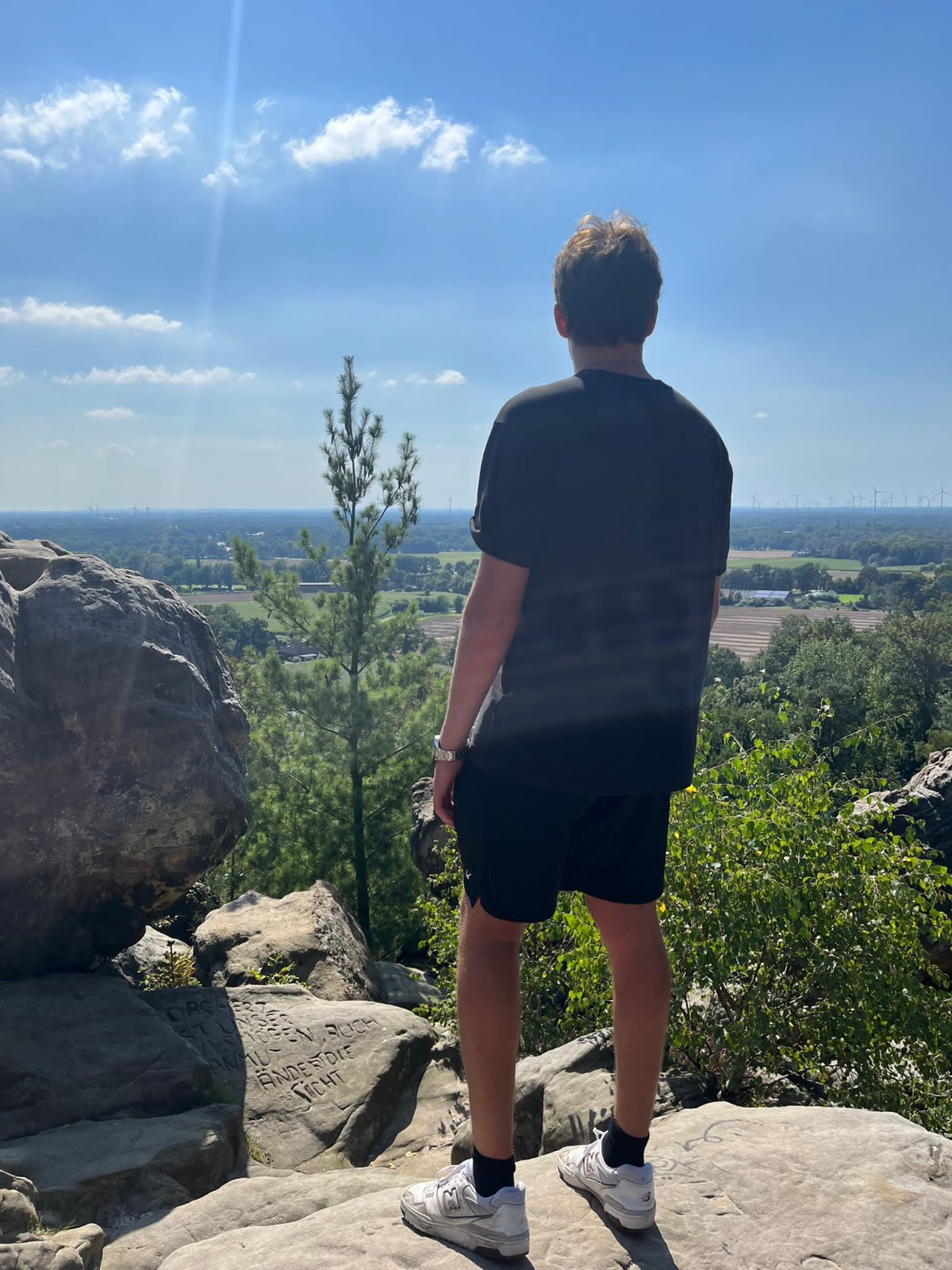
High above the south-western slope of the Teutoburg Forest, one of Westphalia’s best-known rock formations rises out of the woods: the Hockendes Weib (the "crouching woman"). The striking sandstone rock resembles a woman crouching down and is a landmark of Ibbenbüren. It marks the west-north-western end of the roughly four-kilometre-long Dörenther Klippen, an imposing chain of free-standing crags in the Tecklenburger Land.
Up to 40 metres high, the cliffs are made of Osning sandstone that formed around 120 million years ago in the Cretaceous period and was tilted by about 45 degrees along the Osning fault. Since 2003 the Dörenther Klippen and their surrounding woodland have been protected as a nature reserve of some 59 hectares; as part of the European Natura 2000 network they belong to the "Sandsteinzug Teutoburger Wald" conservation area. More than 150 species of moss and lichen grow here, and the eagle owl even breeds in the steep rock faces.
The legend of the Hockendes Weib
A tragic legend has surrounded the rock for generations in this region.
In ancient times, so the story goes, the tides of the sea often reached far inland to the foot of the hills. A woman lived with her children in a small hut at the foot of the Dörenther Klippen. One day, when the water rose with frightening speed, she took her children in her arms and carried them up the hill. To her horror she watched the flood climb ever higher. When the water finally reached her feet, she crouched down, told the children to climb onto her shoulders and began to pray. When she tried to stand up again, she had turned into a rock that held the children high above the waters and saved them from drowning.
Thus the self-sacrificing mother became the rock still known today as the Hockendes Weib. The tale also lives on in the poem "Die Dörenther Klippen und das hockende Weib", which opens with the lines "The water! The water! It comes, it comes!". Since 2002 a sandstone sculpture in front of Ibbenbüren’s town hall has retold the legend in modern form.
Hiking to the Hockendes Weib – straight from Brochterbeck
The wonderful thing for guests of our holiday apartment in Brochterbeck: the Dörenther Klippen begin practically on the doorstep. Brochterbeck lies at the southern foot of the cliffs in the Bocketal valley, so you can walk to the Hockendes Weib with ease.
Along the top of the crags runs the Hermannsweg, one of Germany’s most popular long-distance trails. If you prefer a circular route, follow the certified Teutoschleife Dörenther Klippen, a premium hike of about 9.4 kilometres with sweeping views across the Tecklenburger Land into the Münsterland. Right on the path by the Hockendes Weib, the Almhütte mountain hut and its viewing platform invite you to take a break.
Getting there: By car you reach the Dörenther Klippen walkers’ car park on the B 219; from there it is about 15 to 20 minutes on foot. By public transport, take RVM bus line 63 from Ibbenbüren station towards Riesenbeck to the "Dörenther Berg" stop. From May to October the F 10 cycling and hiking bus runs additionally on Sundays and public holidays.
Tip: bring sturdy footwear – the paths around the rocks are partly rooty and steep. Please keep to the trails to protect the rare rock and moss vegetation in the nature reserve.
Gallery

Where to find it
Hockendes Weib, Dörenther Klippen